Internet of Things is basically the increasing network of physical objects that enhance internet connectivity as well as relay information between these objects and various internet-enabled devices and systems.
A common belief about IoT is that it is purely about consumer devices including smart watches, smart phones or in some cases smart home. In future though, it is likely that Industrial IoT (IIoT) will feature majority of businesses. Numerous sensors will be evident in assembly lines, factories and cars.
Extreme and fast increase in connected devices
Gartner is of the view that in 2016, more than 6.4billion IoT devices were connected. Come 2018, a huge surge in connected devices is expected. There are expectations that the industrial internet of things market will witness an expansion between 2017 and 2025 which is estimated at 23.7%CAGR in order for the market to achieve a US$783,881.1million valuation come 2025. The forecast period entails manufacturing taking a frontline in the market with about 35% share of the overall market. This is attributed to the inclusion of IIoT in the manufacturing sector. At the end of the forecast period in 2025, the healthcare sector is expected to be the leading CAGR.
Advanced IoT Data Analytics
Since data generation is at its peak due to numerous devices and sensors, developers are very concerned about how to competently collect, scrutinize, and improve the data. The data can enlighten businesses target audiences once fed into IoT analytic algorithms. Organizations stand to benefit from the generated data due to the development of comprehensive patterns and data monetization business models.
Potential challenges arising from IoT Application Development
Although IoT is beneficial to upcoming economies, challenges manifest during implementation of IoT including python challenges.
There is a big discrepancy between IoT applications development and classical application development with Python, Net or Java. The use of devices and small edge hardware such as street lights for development fully alters development encounters. Accurate, customized plans, cohesive infrastructure (a robust network, sensors, vast storage, analytics software) are crucial components of successful implementations.
Resource limited devices
In terms of resource, it is projected that the Internet of Things’ computing devices will be constrained. The constraint revolves around memory and processing capabilities and low-power radio standards employed with subject the network interfaces to constrain as well. The issue of device constraints is thus important and deserves a lot of attention. The hard task lies in selecting the device architecture framework.
Connectivity
The foundation of IoT development is connecting billions of things. This requires a power consumption technology that is stable and cost effective. As for now, the application developers must think of amainstream technology that will guarantee their business existence for 5-10 years.
Frameworks and standards
For the purpose of IoT development, IoT standards and frameworks-MQTT, CoAP, OPC US and Apache Kafka need to be integrated to tackle challenges such as the varied IoT environment and security issues. These various alternatives feature varied abstraction levels, functionality and operation complexity. But one single standard does not exist.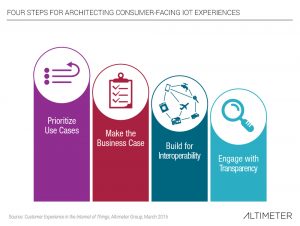
In most situations, it is either extremely unaffordable or difficult to initiate internet communication among existing devices. Some machines lack WiFi, Bluetooth or ZigBee compatibility.
Security
Security is also a major IoT challenge. As a result of addition of numerous new systems to networks, IT departments experience more pressure as they continue to maintain security of their systems. As the adoption of IoT solutions continues to sweep across multiple organizations, it is crucial to curb the threats of cyber-attackers.
Develop IoT Ecosystem as a digital service enabler
The development of an IoT ecosystem is embedded on IoT Platforms. Platforms can be of significance by connecting IoT endpoints to applications and analytics that enhance business outcomes. At least 300 IoT platforms are available in today’s market and they are increasing gradually.
For ZTEsoft, our goal is to offer digital service enabler services to IoT industrial sector which is very dynamic by bringing on board developers and partners. We have made efforts to establish co-operation and IoT ecosystems partnerships and to execute pre-integrated devices and
applications in open laboratory by joining Global IoT Alliance (GIA)
Drawing from the deep knowledge of the telecom industry, ZTEsoft aims at offering end to end IoT platform solutions to CPSs. The solutions range from connectivity platform, device administration platform, application enablement platform to a few applications and devices vertical. The solutions are meant to enable CPSs to acquired advanced connectivity skills, technical competencies in security, data analytics and specialized IoT operational technology services.

Rhonda Evans is a writer for Key Business Profiles, a platform dedicated to capturing the evolving landscape of UK businesses. With a keen eye for detail and a passion for economic and social trends, Rhonda crafts insightful content that reflects the voices of business owners, managers, and entrepreneurs across various industries.